
|
|
July 2025 COMPLETE WORKS FOR SOLO ORGAN - new Hovhaness CD from UK label Toccata Classics |
||||||||||||||||||||||||||||||||||||||||||||||||||||||||||||||||||||||||||||||||||||
|
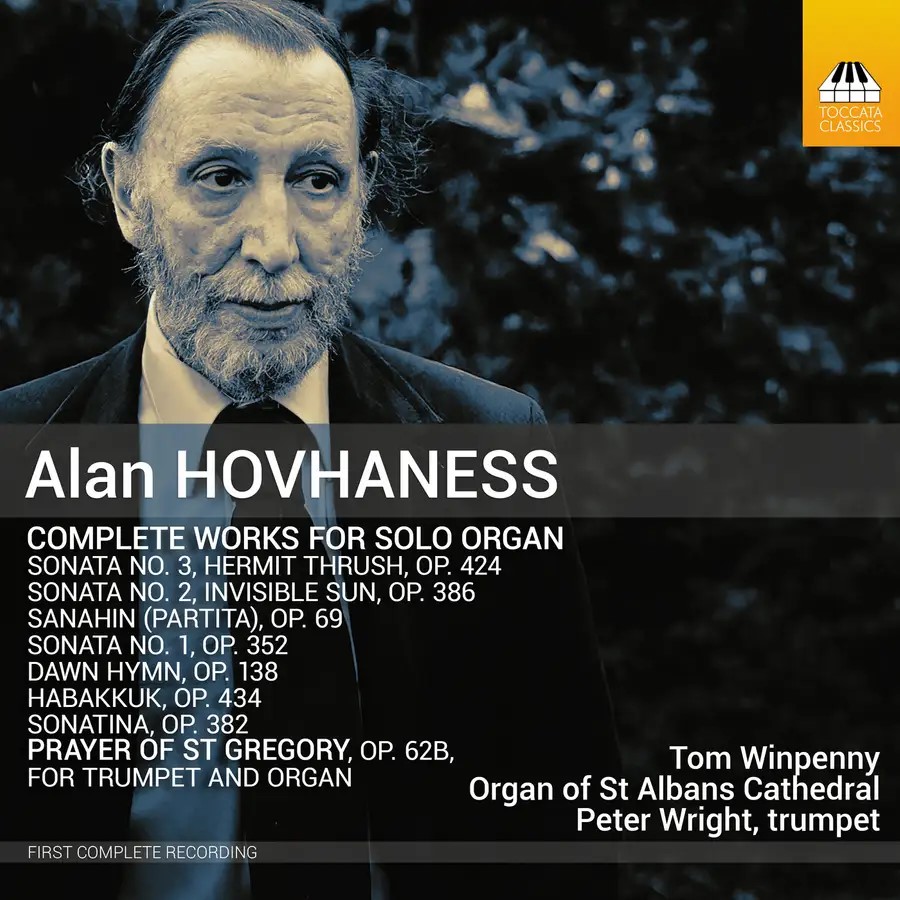
A longstanding gap in the extensive Hovhaness discography has been the near absence of works for solo organ – only two of seven such pieces having been commercially recorded. Most were late, self-published works and lacked the visibility that a mainstream publisher could provide. Now, UK-based independent label Toccata Classics has addressed that gap in one stroke, releasing all seven organ works – five of them world premiere recordings – on a single disc. The program, totalling 75 minutes, even leaves room for Hovhaness's oft-recorded Prayer of St. Gregory in the composer's arrangement for trumpet and organ. Considering that the young Hovhaness spent a decade as a church organist and became so extraordinarily prolific, it's perhaps surprising that he composed only seven works for solo organ. However, the liner notes cite the composer's own admission that "My pedal technique was very poor – I always considered myself an amateur organist." These recordings bear that out, containing nothing especially technically demanding or revelatory, and one work – the Sonatina – has no part for the organ's pedals. The music is consistently melodic, modal, and attractively crafted. As with much of his piano output, these pieces blend elements taken from his exotic toolbox with a steadfast reverence for idioms such as fugue, canon, and hymn-like chordal writing. The organist here is the young Englishman Tom Winpenny, one of the most highly acclaimed and prolific exponents of neglected modern repertoire. His discography spans more than 20 recital discs – mainly on the Naxos and Toccata Classics labels. Though Hovhaness's modest organ works may not challenge Winpenny's technical prowess – he has won awards for 'big beasts' of the modern repertoire such as Messiaen's organ cycles – their visionary and meditative qualities benefit magnificently from his interpretive flair and exquisite organ registrations. This is something these works truly need to come off the page, given the composer's characteristically sparse performance directions. The disc opens with Dawn Hymn (1953), a short piece whose opening arioso may sound familiar to some – Hovhaness later reworked it for woodwind lines in his Mysterious Mountain symphony a couple of years later. The following four organ works span a productive period from 1981 to 1990 in which the composer wrote three Organ Sonatas and a Sonatina. Like many of Hovhaness's piano sonatas, they forgo classical structure in favour of freer forms. The Organ Sonatina comprises three short movements, the third's expressive melody lifted directly from the final movement of Symphony No. 23. Organ Sonata No. 3 is subtitled "Hermit Thrush" and its single movement is flanked by an introduction and coda of bird-like calls in the organ's high register. Between these lies a hymn and fughetta section set to a persistent 7/4 rhythm of three quarter-notes followed by two half-notes. The booklet notes flag up that this trademark Hovhaness rhythm, also heard elsewhere on this disc, was speculated by composer Arnold Rosner to be Hovhaness's musical signature, as it matched the rhythm of his spoken name: A-lan Hov-HAN-ess. As alluring as Rosner's theory is (it seems more inspired than conspicuous cryptograms like B-A-C-H and D-S-C-H) Hovhaness himself described it as "a sacred rhythm [of] three beats for heaven and four beats for earth". But after six minutes of this almost unrelenting rhythm what seems more heavenly is the respite provided by the coda's returning bird calls. |
||||||||||||||||||||||||||||||||||||||||||||||||||||||||||||||||||||||||||||||||||||
|
Alan Hovhaness: COMPLETE WORKS FOR SOLO ORGAN Tom Winpenny, organPeter Wright, trumpet* TOCC 0763 | Total Timing: 81:21 | DDD |
||||||||||||||||||||||||||||||||||||||||||||||||||||||||||||||||||||||||||||||||||||
 |
||||||||||||||||||||||||||||||||||||||||||||||||||||||||||||||||||||||||||||||||||||
| ||||||||||||||||||||||||||||||||||||||||||||||||||||||||||||||||||||||||||||||||||||
|
|
||||||||||||||||||||||||||||||||||||||||||||||||||||||||||||||||||||||||||||||||||||
|
The five-minute Habakkuk, composed in 1995, was Hovhaness's very last work and carried a catalogue number of opus 434. The commissioner here provided subject matter from the Book of Habakkuk in the Hebrew bible. The music alternates between passages of stark, chromatic chords and flowing melody before a final modal hymn section. The disc concludes with its most compelling piece, the 20-minute Sanahin, a seven-movement partita featuring music composed in the 1950s (originally for harpsichord) and 1960s. Drawing upon a wide array of influences from those decades – primarily Armenian music and Western counterpoint – the work also includes two movements titled "Whirling" which reference both Near Eastern traditions and Japanese Gagaku music. The title "Whirling" may allude to the meditative dance of the whirling dervishes, practiced in certain Sufi orders. In these movements, Hovhaness contrasts Byzantine-style melodies, reminiscent of organum, with dense chord clusters that exploit the organ's sustaining power to mimic the sound of the shō, a Japanese reed instrument he admired deeply and played during his time in Japan. Effectively a bonus track (but placed third in the running order), Prayer of St. Gregory is an intermezzo extracted from Hovhaness's 1946 stage work Etchmiadzin, itself later partially reworked into an Etchmiadzin Symphony (1968). The Prayer's arioso trumpet part, typically for Hovhaness, assumes the role of a cantor with the organ as choir. The trumpet soloist here is Peter Wright whose reading is solid, though in places a touch more forceful and less reverent than other versions out there. The authoritative booklet notes are by American composer and organist Carson Cooman, himself an exponent of some of this repertoire. One minor (if non-musical) qualm of this release is the ordering of pieces on the booklet's front cover: they appear neither in chronological nor track order but, as seems to be the case with most Toccata releases, are arranged by decreasing width of the title. This typographical consideration may optimise space at the bottom-right for performer information, but here disrupts the logical flow of the organ sonatas due to their added subtitles (hence listed as No.3, No.2, and then – separated by Sanahin – No.1). ConclusionWith five of the works on this CD appearing for the first time, and Dawn Hymn only previously issued privately, this release is just the catalyst needed to kickstart wider interest in Hovhaness's organ works and it should at least do some brisk trade in the United States where the composer's vocal church music has always fared rather well, at least performance-wise if not on disc. Toccata Classics are to be congratulated on getting behind this repertoire, the latest in their now six hundred-odd CD releases promoting "top-notch classical music that...major record companies are ignoring". And coming almost on the 25th anniversary of the composer's passing in June 2000, this release marks the first all-Hovhaness CD to be recorded in the UK for release by a UK label. © Marco Shirodkar | ||||||||||||||||||||||||||||||||||||||||||||||||||||||||||||||||||||||||||||||||||||
Share this article!


|
||||||||||||||||||||||||||||||||||||||||||||||||||||||||||||||||||||||||||||||||||||
| Hovhaness.com is a participant in the Amazon.com and Amazon EU Associates Programme, an affiliate advertising programme designed to provide a means for sites to earn advertising fees by advertising and linking to Amazon.com/Amazon.co.uk/Amazon.de/Amazon.fr. Hovhaness.com receives a small commission on purchases made from Amazon using links on its pages, which help toward offsetting the costs of maintaining the site. All purchases are processed on the Amazon website, and Hovhaness.com has no record of who uses the links. | ||||||||||||||||||||||||||||||||||||||||||||||||||||||||||||||||||||||||||||||||||||
| Back to top |


