|
|
Alan Hovhaness Book Review – Hinako Fujihara-Hovhaness memoir pays tribute to her husband |
||||
|
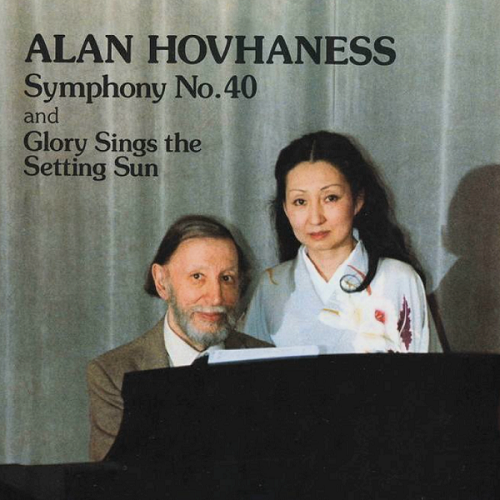
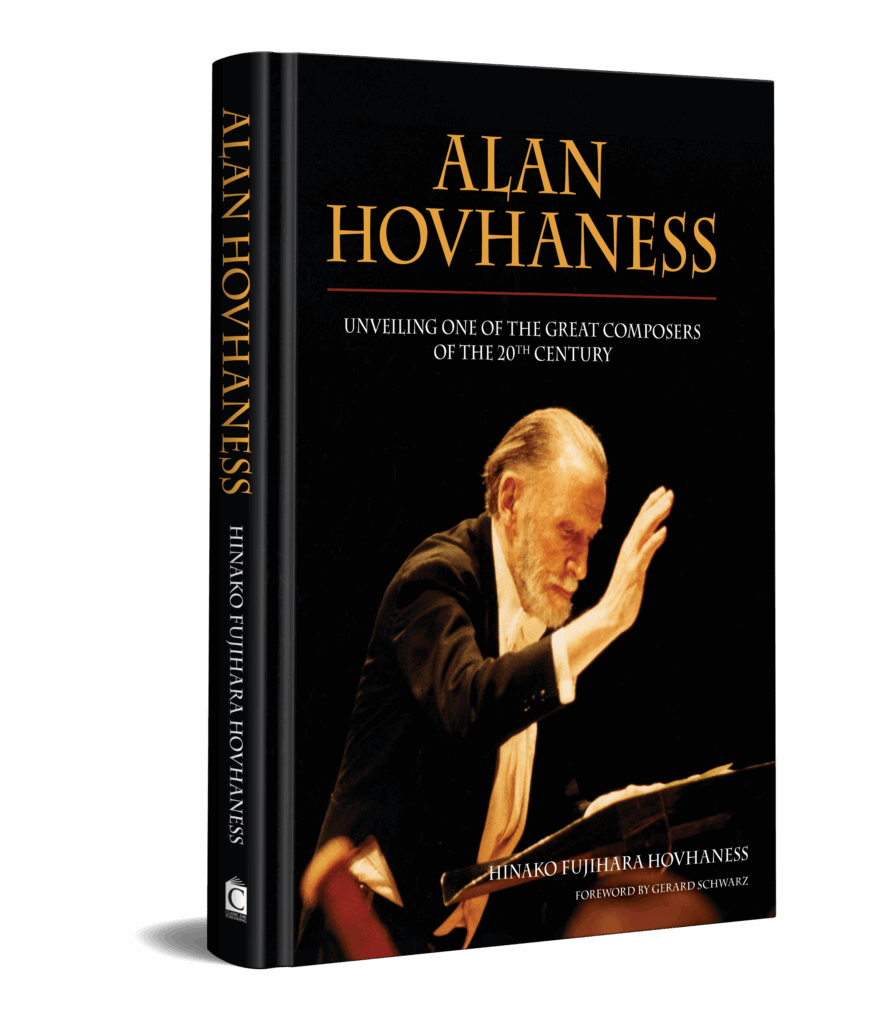
A quarter of a century after his passing comes Alan Hovhaness: Unveiling One of the Great Composers of the 20th Century, the first US-published book centered on the composer. Centered on — if not exclusively about him — because this is not a conventional composer biography or musical monograph. The "unveiling" of the book's title takes the form of a spousal memoir from the perspective of the composer's last wife, Hinako Fujihara-Hovhaness (1932-2022). While she offers many biographical glimpses into Hovhaness's earlier life, the bulk of her testimony reminisces on the couple's 24 years together. During this time, Fujihara was both the composer's wife and his business manager, and in some chapters her presence looms as large as her husband's, producing a memoir which 'unveils' almost as much about the character of the woman behind the man as the man behind the music. The book's genesis came about after Hovhaness's passing in 2000, when his widow found herself penning heartfelt recollections as a therapy for her loss. Following her own recent passing at the age of 90, Fujihara's estate has completed her ambition to publish the memoir. The finished volume is an attractively produced 350-page hardback with around 80 mini-chapters by Fujihara. Tacked on to this are two commentaries from her next of kin, another where Fujihara details her own family history in Japan, and a final portfolio of photographs showcasing Hovhaness's various awards. Fujihara's introduction clarifies that she writes "not about Alan's music, but…him as a composer and a man", specifically "my memories about Alan" and "events I had experienced with him". She points out that her writing is "spontaneous and poignant, straight from my heart". Most chapters are two- to five-page vignettes, many evidently drawn from records and diaries she kept over the years. Subject matter falls into five broad, overlapping categories: selective biographical snapshots based on"the stories he told me"; the composer's personal traits and interests; stories of the couple's vacationing, concertizing and commercial ventures; commentaries on artistic figures in the composer's life; and finally, a cluster of somber chapters chronicling his final illness. Several of these topics are examined below. |
||||
Alan Hovhaness: Unveiling One of the Great Composers
|
||||

 Special Edition (boxed) 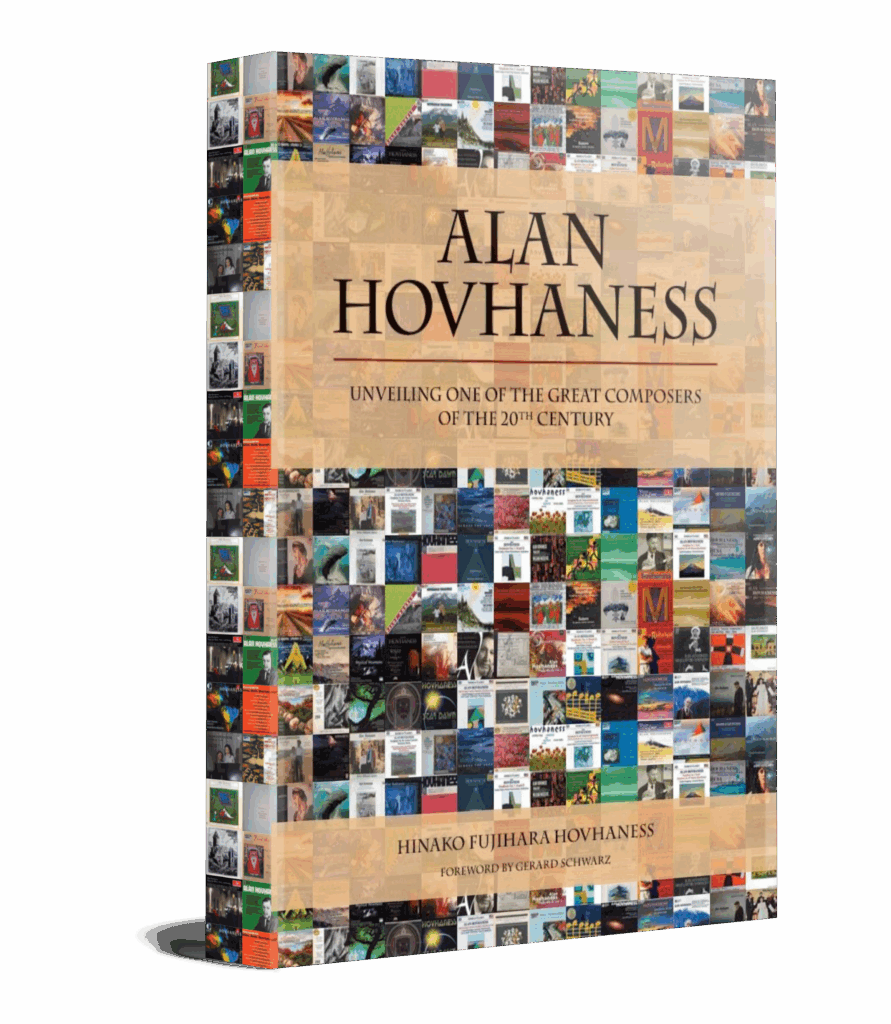
|
||||
|
It is quickly apparent that the author favors candor over circumspection, even if it does not always portray her husband in a flattering light. She dispels any notion that the creator of so much nature-inspired, heavenly music must have been a uniformly gentle and spiritual soul, as some believe. Character-wise, she portrays him as ranging from "a polite, distinguished gentleman to a wild savage, idealistic, and old-fashioned" and obliges with examples. She recounts instances of the composer flying into a sudden rage, such as his "sheer jealousy" in response to her admiration for a choral piece by Paul Creston, or his yelling from an auditorium balcony to a conductor: "My music is not as simple as you think!". Such testimony aligns with the story of the young Hovhaness stomping out of the 1942 Tanglewood Summer School following criticism of his music and suggests — as with many creative artists — a lifelong narcissistic pattern of hypersensitivity to criticism and feelings of being overlooked. As for the composer's eclectic broader interests, we learn of no adherence to any religion or philosophy but rather of investigations into esoteric fads — such as the Ouija board — along with a firm belief in reincarnation and the spirit world. Fujihara also cites vestiges of contempt toward colleagues generally regarded as highly supportive of Hovhaness. For example, that during the 1940s and '50s sisters Maro and Anahid Ajemian — who performed and recorded many works Hovhaness wrote for them — "took his compositions for granted" whereas composer Lou Harrison "got paid a commission fee from them." Of Harrison, she adds that "after he heard Alan's music, he became an 'orientalist' like Alan". Concerning John Cage: "Alan told me he had introduced John to C.F. Peters" but the publisher later "favored…'avantgarde' composers, especially John Cage. Alan felt he was an outcast". (A different narrative goes that Cage picked C.F.Peters out of the Yellow Pages and a deal was signed within a week). Hovhaness ultimately sued C.F. Peters to reclaim unpublished scores allegedly just "sitting on the publisher's shelf". The selective biographical vignettes are likely to be of most interest to readers. We learn of a solitary childhood, the only son of a puritanical mother who "did not allow Alan to attend young people's gatherings" and an academically minded father who initially did not understand his son's musical pursuits. Already well documented is the composer's association in 1940s Boston with his "spiritual teacher" Hermon di Giovanno and the abstract expressionist painter Hyman Bloom, but Fujihara introduces one new claim: that Hovhaness served as a "ghost writer for jazz musicians, such as Artie Shaw". This is not implausible, given that both Shaw and Hovhaness were acquainted with the Armenian-American writer William Saroyan. And it is through his association with Saroyan that Fujihara, to her credit, importantly highlights how Hovhaness gained his most valuable champion, conductor Leopold Stokowski. She reproduces correspondence from the period when Hovhaness and Saroyan collaborated on a few stage works. The jewel amongst this is a well-crafted 1942 letter to Stokowski (sent along with scores) in which Saroyan advocates for the young Hovhaness whom he hopes "to become recognized as an important composer…which I have a hunch he is". Just three months later, Stokowski led the NBC Symphony in the US premiere of the Exile Symphony. He later commissioned Mysterious Mountain (1955), whose recording by the Chicago Symphony under Fritz Reiner became the breakthrough event of Hovhaness's career. Thankfully, Fujihara does not shy away from the prickly subject of Hovhaness's previous marriages, arguably the most intriguing aspect of his personal life. While one hardly expects Fujihara to endorse her predecessors, her sharply drawn portrayals of some former wives invite speculation as to whether facts are being conflated with personal grievances, even if they make for entertaining reading. Of third wife, Serafina, Fujihara recalls that "Alan could not stand living with her, not because of her being a witch, but because of the chaotic [lifestyle] with her". Fourth wife, Phylis, promised to "give him a divorce the next day" if he married her, but this took over two years and "Alan continued to send her a check every month until 1994" as alimony. Fujihara assigns no explicit culpability on Hovhaness for his many marriages, seemingly exonerating him with "…his life was led by the women around him. At some point, he tried to correct things, but went through another cycle of wrong marriage, until he met me". In her account of her courtship with Hovhaness, Fujihara writes freely, providing valuable insight into them both. On paper, the pairing seemed unlikely: a 21-year age gap, Hovhaness a modestly living intellectual absorbed in composition, Fujihara a married mother of three with a more opulent outlook, including fine dining and a "compulsive addiction" to buying dresses, but who also sang in a choir. Fujihara recounts attending a 1973 Seattle concert given by Hovhaness and his then wife, observing that "Alan Hovhaness should have a more glamorous wife…It looked like [Mrs. Hovhaness] had jumped up on the stage with street clothes". Approaching him backstage, she recalls, "He was obviously attracted to me". After she invited him to dinner with her family, he admitted "he wanted to see me and help my singing". By 1974, she and her piano accompanist were having an affair, but marriage came only in 1977. Fujihara hints that her own aspirations may have played a role in her becoming the sixth Mrs. Hovhaness. An amateur soprano herself who idolized Metropolitan opera star Lily Pons, she concedes: "I married Hovhaness and abandoned my family. Something about a composer is irresistibly fascinating, especially to a singer". Her conservative musical tastes meant she deplored much contemporary music as it was "not supposed to be beautiful and romantic", and she credits herself with steering her husband's compositional direction: "…with my encouragement, he composed in true classic form…which won the audience's acceptance and approval" — a plausible claim given Hovhaness's more romantic style from the mid-1970s onwards. Elsewhere the composer yields to his muse's forbiddance of his writing a commissioned requiem because of her superstition surrounding the story of Mozart's Requiem; with the work retitled Revelations of St. Paul she concludes: "My watchful thinking paid off, and Alan lived another twenty years".
For all their differences, the couple clearly complemented one another rather well. Fujihara keenly supported a husband who, aside from his composing, was apparently so helpless he "could not even make coffee". She possessed the organizational and business acumen he lacked, ensuring contracts were always in place before commissions were begun, establishing a self-publishing operation and running the couple's short-lived record label, Fujihara Records. Hovhaness seems to have inadvertently improved his situation by divorcing his former wife and business manager and marrying a seemingly more industrious successor who relished this role. From the early 1990s Hovhaness's cause was further helped when Fujihara began diligently reinvesting his royalties into numerous commerical CD recordings. One proved a major seller: a disc featuring the Mount St. Helens Symphony, a commission that came from former publisher C.F. Peters following — we are told — Fujihara's initiative in thawing her husband's standoff with them. Fujihara takes evident pleasure in recounting the couple's numerous concertizing activities, as well as extensive travels throughout North America, Asia, and Europe. Some of the book's most engaging storytelling arises here, driven largely by Fujihara's vivid presence. The memoir leaves no doubt that Hovhaness found contentment in his final marriage. Beyond Fujihara's proactive advocacy for his music, she provided the domestic peace and stability conducive to his perpetual productivity, eventually to include — for better or worse — another 30 symphonies. Even his first wife Martha, whom the couple visited in 1978, later wrote to him "[Hinako] understands you and accepts you as you are. After a life on a rather stormy sea, you must feel that at last you have reached a safe harbor". Reactions to this memoir are likely to be mixed. The title Unveiling One of the Great Composers of the 20th Century may lead some to expect a traditional biography or a study of the music itself. As noted earlier, Fujihara's introduction stipulates that her aim is to reveal her husband "as a composer and a man". Her intimate, emotionally grounded vignettes certainly succeed in humanising him, portraying not a remote, ivory-tower figure but someone firmly rooted in everyday life — as a husband, a stepfather, and an individual with the expected habits and quirks. In the end, however, it is the man rather than the composer who comes most clearly into focus and a more fitting title might therefore have been something like My Husband Alan Hovhaness: The Man Behind the Music. Also, not infrequently the author places herself prominently at the centre of the narrative — a personal trait acknowledged in a postscript by her son (from her first marriage), who describes her as a "very strong, overpowering personality…always the center of attention". More significant concerns, however, arise from a laissez-faire editorial stance. Japanese-born Fujihara recalls that she "needed help with my English" to write her stories and so hired an editor, but with the instruction "not to change the personality and originality of my writing". Preserving this "personality and originality" proves to be a double-edged sword. On the positive side, her unfiltered voice offers revealing insights into the woman Hovhaness married, such as her sharply polarized outlook on people and events, exemplified by the assertion: "In this world there are two kinds of people, ones who are fascinated by people like Alan and others who are jealous of them". Her candor also reveals an emotional volatility that at times invites empathy — notably in her relentless efforts to keep her dying husband alive no matter what — but elsewhere descends into behavior suggestive of paranoia. For instance, she recounts bringing a "very cute but very sharp" fruit knife to Hovhaness's 80th birthday gala (at Carnegie Hall, no less) to defend him should her daughter's boyfriend — previously scolded by Hovhaness over the phone — try to shoot the composer onstage whilst conducting . This is all genuinely entertaining but, on the negative side, a firmer editorial hand might have mitigated the book's conspicuous housekeeping issues. Facts and anecdotes are sometimes repeated verbatim across the chapters, suggesting a manuscript assembled piecemeal over many years and giving it a disjointed feel. Also, chapters are not always chronological and occasionally digress into flashbacks and excursions that obscure the main narrative thread. The absence of an index (to locate the people and works mentioned) is perhaps excusable, since this is not intended as a reference work. Finally, this memoir — like most — does not escape the inherent limitations of anecdotal testimony, such as incomplete details and possible intrusions of curated reality. Such concerns are heightened today, when AI chatbots can harvest an 'alternative fact' from a published source if it goes unchallenged elsewhere. One such example involves Hovhaness's fifth wife Elizabeth. Fujihara concedes that "She was a good pianist and smart" but also rebukes her as "Elizabeth, my rival" claiming that after the couple's 1977 divorce "She did not want to give [Alan] back Poseidon, which was lawfully his". While the Poseidon label existed to disseminate composer-conducted recordings of his work, Fujihara fails to mention — or was never told by her husband — that Elizabeth largely financed the company through an inheritance and was (like Fujihara herself later came to be) the composer's business manager — factors that probably explain why she was awarded the company in the divorce settlement. Counterbalancing the above grumbles, the book has much to recommend it. Just as Hovhaness once asserted "My purpose is to create music not for snobs, but for all people" so his widow has written a memoir that will appeal more to fans of the composer than classical music academia, with ample material serving to demystify the man behind the music. There are also unexpected and often entertaining anecdotes, such as Hovhaness being asked by his publisher C.F. Peters to sit through an erotic gay movie to determine how much of his music had been used without permission. Fujihara also offers factual nuggets that may just happen to resolve long-standing speculations among devoted fans, such as why the composer wrote so many late symphonies and why some are really concertos in all but name. On another positive note, the book is interspersed with photographs that help bring the narrative to life. At the very end, readers are treated to images of the composer's doctoral certificates and various awards, offering tangible evidence of his achievements and his standing within at least certain quarters of the American musical establishment. The final cluster of chapters sees Fujihara shift from memoir to something closer to a journal which chronicles Hovhaness's last three years of acute mental and physical decline, when he became entirely dependent on her. She records consultations with doctors, hospital stays, and even the questioning by friends and medical professionals about prolonging a hopeless situation. None of this can "unveil" anything about Hovhaness as either composer or man, but Fujihara evidently needs to provide written testimony of her determination to "fight back until the day Alan died". And this harrowing coda serves to underscore the true purpose of her book: a widow's heartfelt tribute to the husband who was "my whole world", functioning as an affirmation of their bond as she saw it, rather than primarily as an account of his life and music. © Marco Shirodkar | ||||
Share this article!


|
||||
| Hovhaness.com is a participant in the Amazon.com and Amazon EU Associates Programme, an affiliate advertising programme designed to provide a means for sites to earn advertising fees by advertising and linking to Amazon.com/Amazon.co.uk/Amazon.de/Amazon.fr. Hovhaness.com receives a small commission on purchases made from Amazon using links on its pages, which help toward offsetting the costs of maintaining the site. All purchases are processed on the Amazon website, and Hovhaness.com has no record of who uses the links. | ||||
| Back to top | |
|
|